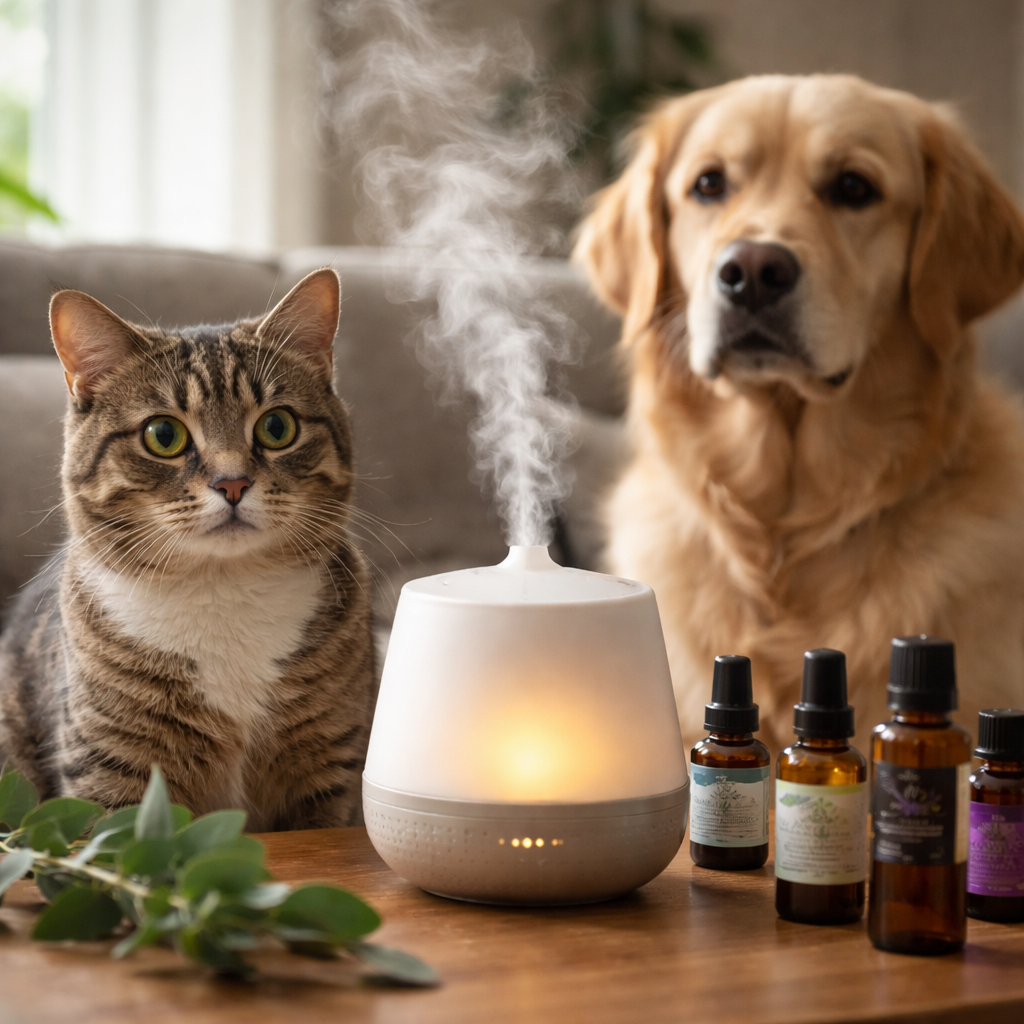
Many pet owners never stop to ask whether is it safe to use essential oils around pets until something goes wrong — a cat acting lethargic after a diffuser session, or a dog suddenly vomiting with no obvious cause. The connection between aromatherapy and animal health is real, documented, and worth understanding before you reach for that bottle of lavender or eucalyptus.
Why pets react differently than humans
Animals process chemical compounds through entirely different metabolic pathways compared to humans. A dog’s sense of smell is estimated to be 10,000 to 100,000 times more sensitive than ours, which means even a light concentration of aromatic compounds can be overwhelming to their nervous system. Cats present an even greater concern: they lack a specific liver enzyme called glucuronyl transferase, which is responsible for breaking down certain phenols and terpenes found in many essential oils. Without this enzyme, toxic compounds accumulate rather than being safely eliminated.
This is not a minor detail. It fundamentally changes how we should think about using plant-based aromatherapy in a home with animals.
Oils that pose the highest risk to cats and dogs
Veterinary toxicology sources and organizations such as the ASPCA Animal Poison Control Center consistently flag certain essential oils as particularly hazardous. The level of danger varies depending on the species, the concentration, and the method of exposure — whether it’s direct skin contact, ingestion, or airborne diffusion.
| Essential Oil | Primary Risk | Most Affected Species |
|---|---|---|
| Tea tree (Melaleuca) | Neurological damage, liver toxicity | Cats, dogs |
| Eucalyptus | Respiratory distress, drooling, lethargy | Cats, dogs, birds |
| Pennyroyal | Liver failure | Dogs, cats |
| Clove | Liver toxicity, skin irritation | Cats especially |
| Cinnamon bark | Mucous membrane irritation | Cats, dogs |
| Pine and fir oils | Kidney and liver strain | Cats |
Birds and small mammals like rabbits, guinea pigs, and ferrets are even more sensitive. Their respiratory systems are exceptionally delicate, and prolonged exposure to diffused oils — even those considered mild — can cause serious harm.
Diffusers, sprays, and topical use — not all exposure is equal
How an oil reaches your pet matters enormously. There are three main routes of exposure, each carrying different levels of risk:
- Passive diffusion in a well-ventilated room is generally considered lower risk for dogs, but should be avoided entirely around cats, birds, and small animals.
- Direct skin application — including so-called “natural” flea treatments containing concentrated oils — is a common source of poisoning cases reported to veterinary clinics.
- Ingestion, whether accidental (licking a surface where oil was applied) or through poorly formulated pet products, tends to cause the most severe reactions.
“Even products marketed specifically for pets can contain concentrations that are harmful, particularly for cats. Always verify any product with your veterinarian before use.”
One commonly misunderstood scenario involves reed diffusers and plug-in aromatherapy devices. Because they operate continuously and in enclosed spaces, they can build up airborne concentrations that are far higher than a single brief diffuser session. A cat who sleeps in the same room as an always-on diffuser may be exposed for hours every day.
Signs your pet may be reacting to essential oils
Recognizing early symptoms can prevent serious harm. Pet owners should know what to watch for, particularly after introducing any new scented product into the home.
- Excessive drooling or pawing at the mouth
- Watery eyes or nasal discharge
- Vomiting or diarrhea
- Unsteady movement or muscle tremors
- Labored or rapid breathing
- Unusual lethargy or hiding behavior
- Skin redness or irritation at the point of contact
If any of these signs appear after aromatherapy use, the immediate step is to remove the animal from the area, provide fresh air, and contact a veterinarian or a pet poison helpline. Do not wait to see if symptoms resolve on their own.
Practical steps for aromatherapy lovers with pets
Giving up essential oils entirely is not the only option. With thoughtful adjustments, many people successfully enjoy aromatherapy while keeping their pets safe. The key is reducing exposure through space, ventilation, and informed product choices.
- Use diffusers only in rooms your pet cannot access, and always ensure those rooms are well-ventilated.
- Limit diffusion sessions to 30–60 minutes rather than running devices continuously.
- Store all essential oils in sealed containers out of reach — curiosity can lead pets to knock bottles over and come into direct contact.
- Avoid using essential oil-based cleaning sprays on surfaces where pets rest or eat.
- If you apply oils to your own skin, allow them to fully absorb before handling your pet.
- When in doubt about a specific oil, consult a veterinarian with experience in integrative or holistic animal care.
Some pet owners choose to explore hydrosols — the water-based byproducts of oil distillation — as a gentler alternative. While hydrosols generally contain far lower concentrations of aromatic compounds, they are not completely risk-free for cats and should still be used with caution and veterinary guidance.
What the research and veterinary community actually say
The veterinary consensus is not that essential oils are universally dangerous in every form, but that the risk profile is specific, real, and too often underestimated by well-meaning pet owners. The rise of home wellness culture has led to a parallel rise in reported cases of essential oil-related toxicity in companion animals, according to data from veterinary poison control centers.
Natural does not mean safe — this is a core principle that veterinarians return to repeatedly when discussing plant-based products. Many plants produce highly toxic compounds as natural defense mechanisms, and concentrated extraction of those compounds amplifies the risk significantly.
Responsible use means being honest about the species in your home, the layout of your living space, and the specific oils you’re working with. A golden retriever in a large, well-ventilated house is a very different situation from a cat in a small apartment where a diffuser runs daily.
Your home, your pet, your call — but make it an informed one
The aromatherapy experience you want and the safety your pet deserves are not necessarily in conflict — but finding that balance requires more than good intentions. It requires specific knowledge about which oils carry the highest risk, how your particular pet’s physiology responds, and what practical steps genuinely reduce exposure rather than just feeling precautionary.
Talk to your vet, check resources from established veterinary toxicology organizations, and approach essential oil use in a pet-friendly home the same way you would any other household chemical: with respect for its potency and clarity about its risks.
