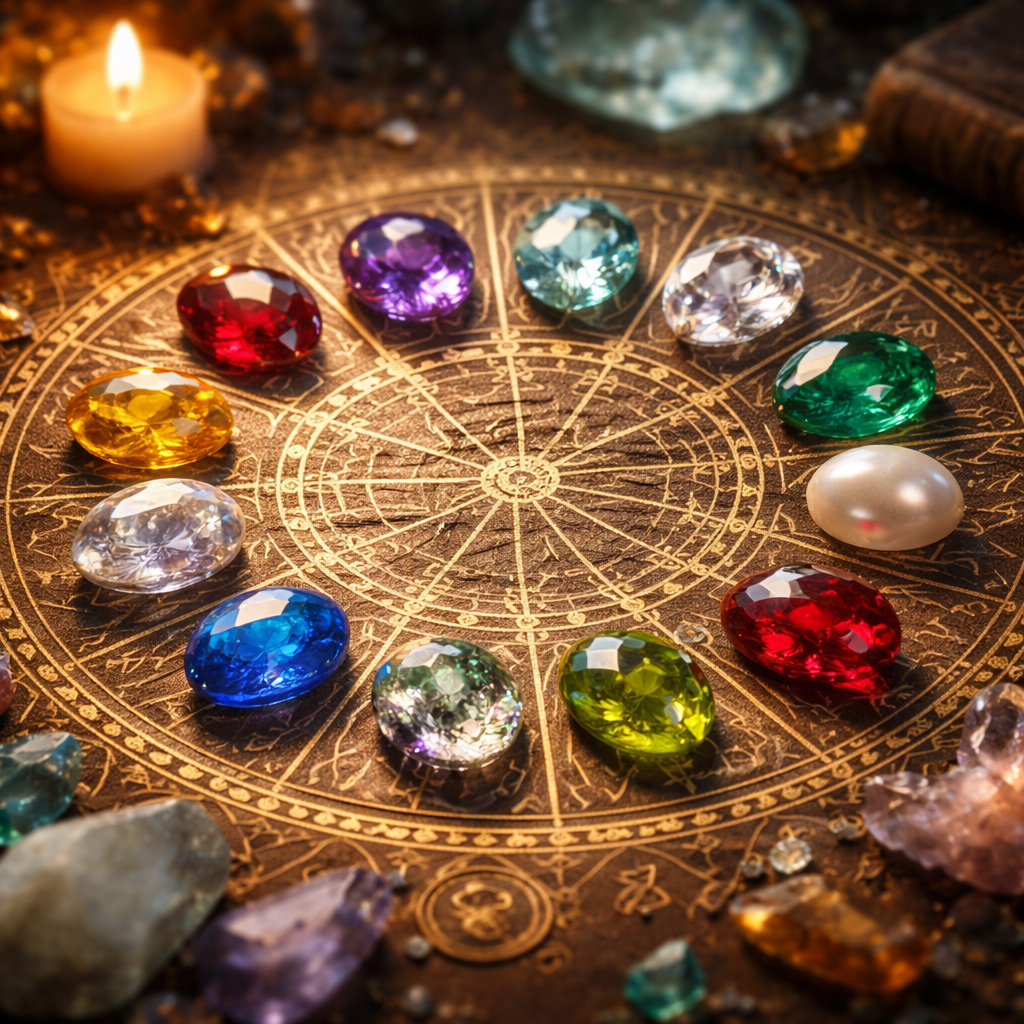
Most people know their birthstone by name, but far fewer understand what that stone actually represents — its history, its symbolism, and why it was assigned to a particular month in the first place. The meaning of birthstones by month goes much deeper than jewelry trends or gift-giving traditions, touching on ancient beliefs, cultural heritage, and the human desire to find personal significance in the natural world.
Where the Tradition Actually Comes From
The concept of connecting gemstones to months of the year has roots in multiple ancient cultures. Scholars trace one of the earliest versions to the Breastplate of Aaron described in the Book of Exodus — a ceremonial garment set with twelve stones, each representing one of the twelve tribes of Israel. Over centuries, early Christian and Jewish writers began associating those twelve stones with the twelve months and, eventually, with the twelve signs of the zodiac.
The standardized list that most people recognize today was formalized in 1912 by the American National Retail Jewelers Association, with minor updates made in the decades since. That said, many countries and traditions maintain their own alternative lists, so you may find slight differences depending on the source.
A Stone for Every Month — and What It Carries
Rather than simply listing names, it helps to understand the symbolic weight each stone carries and where those associations come from.
| Month | Birthstone | Core Symbolism |
|---|---|---|
| January | Garnet | Protection, strength, trust |
| February | Amethyst | Clarity, calm, inner wisdom |
| March | Aquamarine | Courage, communication, serenity |
| April | Diamond | Endurance, purity, eternal love |
| May | Emerald | Renewal, fertility, loyalty |
| June | Pearl / Alexandrite | Purity, transformation, rarity |
| July | Ruby | Passion, vitality, prosperity |
| August | Peridot | Healing, positivity, protection |
| September | Sapphire | Wisdom, sincerity, nobility |
| October | Opal / Tourmaline | Creativity, hope, emotional balance |
| November | Topaz / Citrine | Abundance, confidence, warmth |
| December | Turquoise / Tanzanite / Blue Zircon | Good fortune, healing, friendship |
Some months have more than one birthstone — this usually happened when the official list was updated to include more accessible or commercially available alternatives alongside the original stone.
The Stones Worth Knowing in More Detail
A few birthstones carry particularly rich histories that go far beyond surface-level symbolism.
Garnet, the stone of January, gets its name from the Latin word “granatum,” meaning pomegranate seed — a reference to its deep red color. It was carried by travelers in ancient times as a protective talisman, believed to light the way in darkness. Medieval Europeans used it as a symbol of faith and truth in relationships.
Amethyst, assigned to February, was once considered as precious as ruby or emerald. Ancient Greeks believed it prevented intoxication — the word itself comes from “amethystos,” meaning “not drunk.” For centuries it was reserved for royalty and the clergy, which gives it an air of spiritual authority that persists in modern crystal lore.
Sapphire has been associated with divine favor and heavenly wisdom across cultures as different as ancient Persia, medieval Europe, and Buddhist Southeast Asia — making it one of the most universally respected gemstones in human history.
Ruby, the birthstone for July, holds a special place in Sanskrit texts as the “king of precious stones.” In Burmese warrior culture, rubies were believed to make soldiers invincible in battle. Even in modern gemology, a fine ruby of several carats can outvalue a diamond of the same size — a fact that surprises most people.
How People Actually Use This Information
Understanding birthstone meanings has practical relevance in several areas of everyday life. The most obvious is gift selection — a piece of jewelry featuring someone’s birthstone feels personal in a way that a generic gift rarely does. But the uses go further than that.
- Personalized jewelry design: Many people choose to incorporate their own or a loved one’s birthstone into custom rings, pendants, or bracelets with intentional meaning.
- Milestone gifts: Birthstones are commonly used for graduation gifts, push presents, anniversary jewelry, and new baby keepsakes.
- Spiritual and wellness practices: Within crystal healing traditions, birthstones are thought to resonate with individuals born in their respective months, amplifying their natural strengths.
- Family heirlooms: Stacking rings or mother’s rings featuring each child’s birthstone have become a lasting jewelry tradition across generations.
Do Birthstones Actually Mean Anything — or Is It Just Tradition?
This is a fair question, and the honest answer sits somewhere in the middle. There is no scientific evidence that wearing your birthstone affects your wellbeing, personality, or fortune. However, the psychological effect of wearing something with personal significance is well documented — it can reinforce a sense of identity and intention.
What is undeniably real is the cultural and historical weight of these stones. When you learn that sapphire was worn by ancient Persian kings who believed it made the sky blue, or that emerald was sacred to Venus and associated with love and rebirth, you are engaging with thousands of years of human meaning-making. Whether or not you hold those beliefs, the stories themselves are worth knowing.
The tradition also evolves. The Jewelry Industry Council of America and other bodies have updated official lists over the decades to reflect changing markets and newly discovered stones. Tanzanite, for instance, was only added as a December birthstone in 2002 — it had not even been discovered until 1967. This shows that the tradition is living, not frozen in ancient texts.
Your Stone Is a Starting Point, Not a Prescription
One of the more freeing aspects of birthstone lore is that no tradition strictly forbids you from wearing a stone from another month. Many people feel a stronger personal connection to a stone outside their birth month — whether because of its color, meaning, or simply the way it looks. The historical purpose of birthstones was always about connection and meaning, never limitation.
If your February amethyst resonates with you deeply, wear it. If you were born in January but find yourself drawn to the cool serenity of aquamarine, that choice says something real about who you are. The stones are tools for reflection and expression — and that, ultimately, is the most enduring meaning any gemstone carries.
