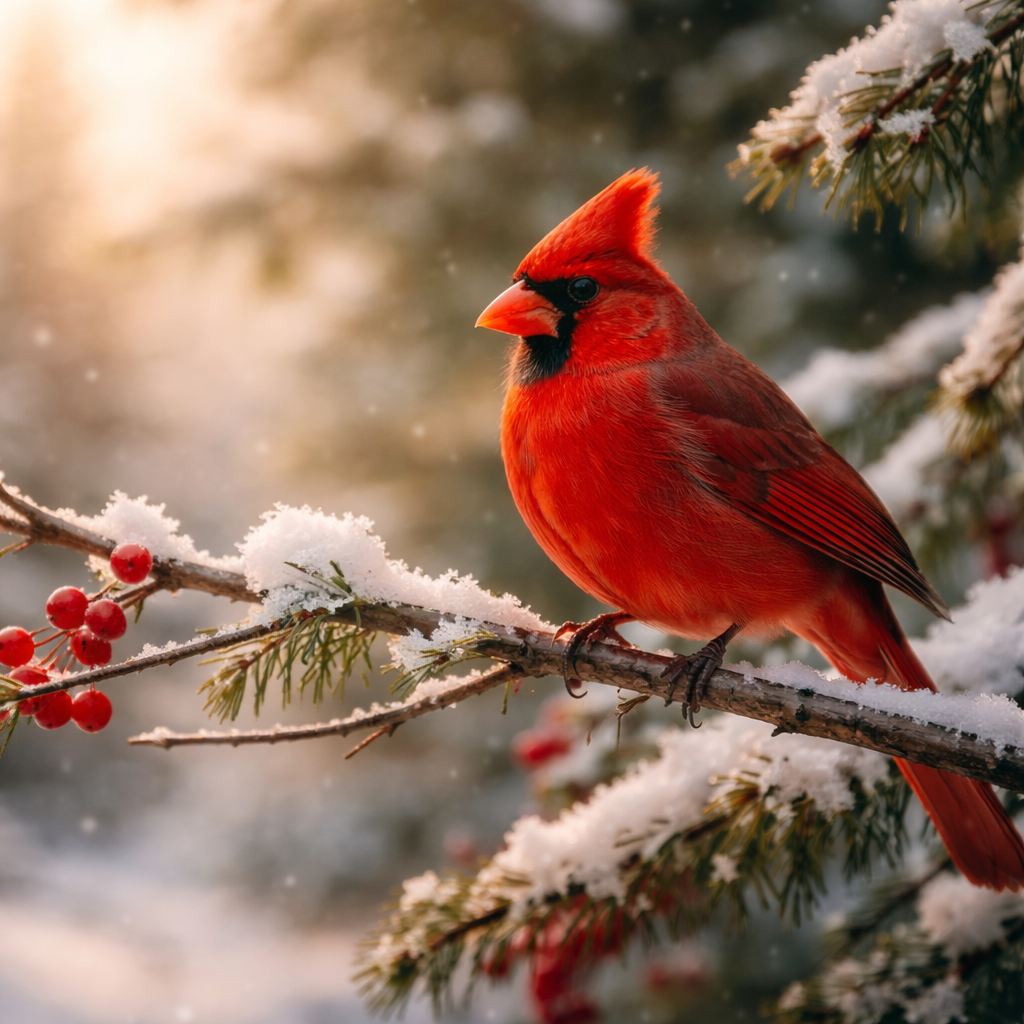
A flash of red landing on a nearby branch can stop you mid-thought — and many people find themselves wondering about the meaning of cardinal bird visits long after the bird has flown away. Whether you’re a nature lover, someone who has recently lost a loved one, or simply a curious observer, the cardinal has a way of demanding attention that few other backyard birds can match.
Why Cardinals Stand Out Among Other Backyard Birds
The northern cardinal (Cardinalis cardinalis) is one of the most recognizable birds in North America. Unlike migratory species, cardinals stay year-round, which means people encounter them in every season — including winter, when a bright red male perched on a snow-covered branch creates a striking visual that’s hard to ignore.
This consistent presence, combined with the bird’s vivid coloring and bold, melodic song, has made the cardinal a central figure in folklore, spiritual traditions, and personal stories across many cultures. It’s not surprising that sightings often feel significant, even to people who don’t typically attach meaning to wildlife.
Cultural and Spiritual Symbolism Across Traditions
Cardinal symbolism appears in a wide range of belief systems and cultural backgrounds. While interpretations vary, several themes appear consistently across different traditions.
- In many Native American traditions, the cardinal is connected to relationships, loyalty, and the importance of staying close to home and family.
- In Christian symbolism, the bird’s red plumage has long been linked to the blood of Christ, vitality, and spiritual renewal.
- In general folk belief across the United States and Canada, a cardinal visit is widely interpreted as a message from a deceased loved one — a comforting idea that has spread through generations of oral tradition.
- In some East Asian symbolic frameworks, red birds are associated with fire, energy, and the southern direction, representing strength and good fortune.
What makes these traditions interesting is not whether they are literally true, but what they reveal about human psychology — our deep need to find connection and meaning in the natural world, especially during moments of grief or transition.
“When a cardinal appears in your yard, it’s a visitor in red” — this saying, common in American folk culture, reflects how deeply the bird has embedded itself in personal and collective memory.
The Grief Connection: Cardinals and Lost Loved Ones
One of the most emotionally resonant interpretations is the belief that cardinals carry the spirits of people who have passed away. This idea is not tied to a single religion or culture — it appears independently in many communities and has only grown more widespread in the age of social media, where people share their sighting stories freely.
Grief counselors and psychologists often note that finding meaning in natural signs — including unexpected animal encounters — can be a healthy part of the mourning process. It doesn’t require a literal belief in the supernatural; even a symbolic or metaphorical reading can provide comfort and a sense of continued connection.
What Different Cardinal Sightings Might Suggest
Not every cardinal visit feels the same, and people often describe distinct circumstances around their sightings. Here’s how different encounters are commonly interpreted in popular and spiritual contexts:
| Sighting Type | Common Interpretation |
|---|---|
| Single red male at your window | A message or reminder from a deceased person close to you |
| A pair of cardinals (male and female) | Balance, partnership, and harmony in relationships |
| Cardinal singing near your home | Good news or positive energy approaching |
| Cardinal appearing during a difficult decision | A sign to trust your instincts and move forward |
| Cardinal in an unusual place (indoors, etc.) | Often viewed as an especially strong or urgent message |
It’s worth noting that these interpretations are rooted in personal belief and cultural tradition, not ornithology. A male cardinal tapping on your window is most likely defending his territory against his own reflection — but what you do with that moment emotionally is entirely your own.
The Psychology Behind Noticing Cardinals
There’s a well-documented psychological phenomenon called apophenia — the tendency to perceive meaningful connections between unrelated things. It’s not a flaw; it’s part of how the human brain processes the world. When we’re going through something emotionally significant, our pattern-recognition systems become more sensitive, making ordinary events feel loaded with meaning.
This is why cardinal sightings often happen — or seem to happen — at pivotal moments: right after a funeral, during a difficult personal decision, or on an anniversary. The bird was likely there before. We just weren’t paying attention the same way.
Understanding this doesn’t diminish the experience. If anything, it highlights how powerful our inner lives are and how nature can serve as a mirror for what we’re processing internally.
How to Invite More Cardinal Visits (If You Want To)
If you’d like to see cardinals more often — for whatever reason — there are simple, practical steps you can take. Cardinals are not hard to attract if you know their preferences.
- Place a bird feeder stocked with sunflower seeds or safflower seeds, both of which cardinals strongly prefer over mixed seed blends.
- Position the feeder near shrubs or low trees — cardinals feel safer when cover is close by and rarely feed in completely open spaces.
- Avoid using reflective or brightly colored feeders near windows during breeding season, as males may spend hours attacking their reflection.
- Provide a shallow birdbath, especially in summer, since fresh water attracts cardinals consistently throughout the year.
- Plant native berry-producing shrubs like serviceberry, dogwood, or sumac to offer natural food sources.
When a Red Bird Becomes a Personal Symbol
Perhaps the most honest answer to what cardinal visits mean is that they mean whatever you need them to mean — within reason. Across cultures, across centuries, and across individual stories, this bird has consistently played the role of messenger, comforter, and symbol of vitality. That consistency itself says something real about the relationship between humans and the natural world.
You don’t need to believe in signs or spirits to appreciate a cardinal. But if a moment of stillness, a flash of red, and an unexpected sense of connection help you feel less alone or more grounded — that’s a genuinely useful thing, regardless of what’s behind it.
