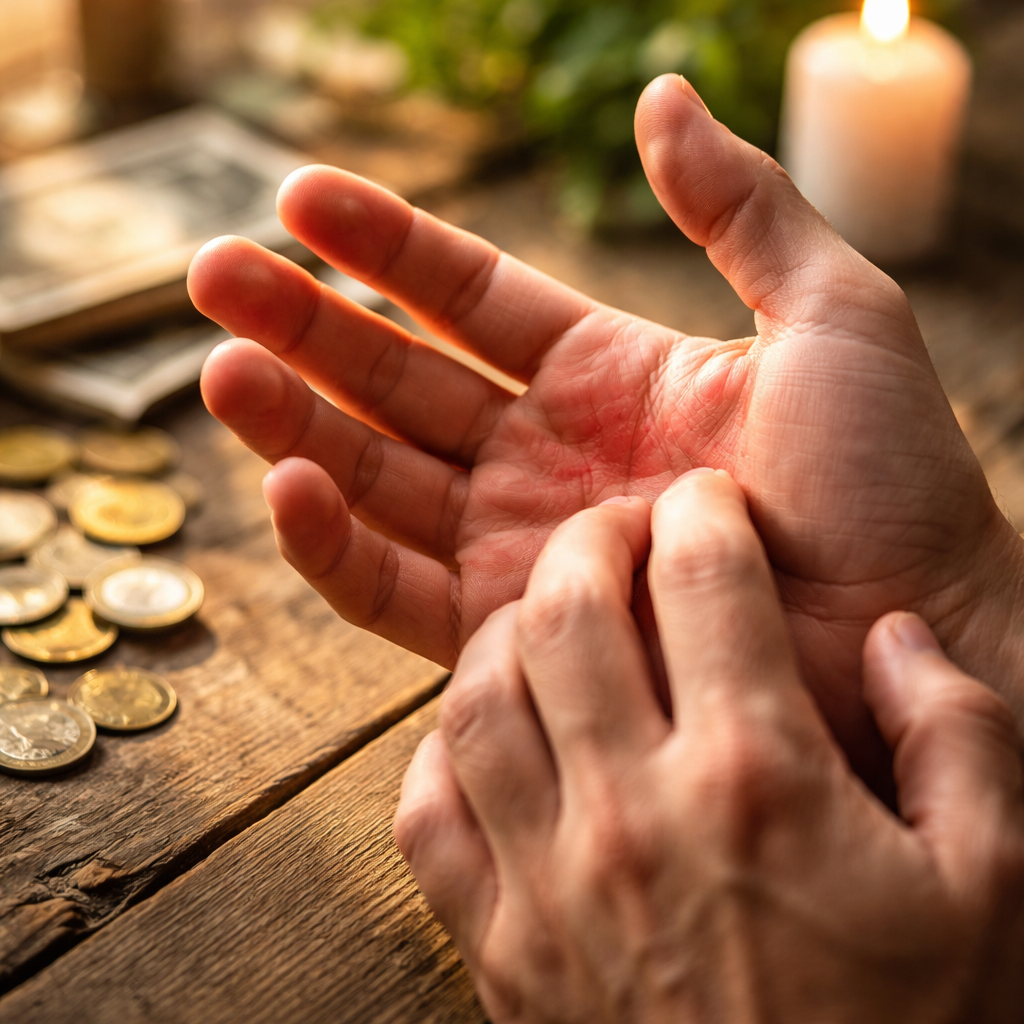
Almost everyone has experienced it at some point — that sudden, inexplicable tingling or scratching sensation in one or both hands. The meaning of itchy palms has been discussed for centuries across cultures, folklore traditions, and even medical science. And while the interpretations vary widely, the fact that so many people search for an explanation suggests this experience genuinely sparks curiosity and sometimes concern.
What folklore and superstition actually say
Long before dermatology existed, people looked for patterns in physical sensations. Itchy palms became one of the most universally recognized omens across different cultures. Interestingly, the meaning often depends on which hand is involved — and the interpretations are surprisingly consistent across regions that had no historical contact with each other.
In many Western traditions, an itchy right palm is believed to signal that money is coming your way — you are about to receive unexpected funds or financial good news. The left hand, on the other hand, supposedly means the opposite: money is going out, whether through bills, expenses, or an unexpected cost.
| Hand | Traditional belief | Cultural origin |
|---|---|---|
| Right palm | Money or luck coming in | British, Eastern European folklore |
| Left palm | Money going out | British, American folk tradition |
| Both palms | A major financial change ahead | Various |
Some Native American traditions interpret itchy palms as a sign that you are about to shake hands with a stranger — meaning a new connection or encounter is near. In Turkish folklore, the right hand itching means you will give money to someone, while the left signals you will receive it — the exact opposite of Western belief. This contrast alone shows how subjective and culturally shaped these interpretations are.
The medical side of the story
Setting superstition aside, there are very real and well-documented medical reasons why your palms might itch. This is where it becomes genuinely important to pay attention, especially if the itching is persistent, severe, or accompanied by other symptoms.
Dermatologists identify several common causes of itchy palms that have nothing to do with luck or money:
- Dry skin — particularly in cold or low-humidity environments, the skin on the palms loses moisture and becomes irritated
- Contact dermatitis — a reaction to something your hands have touched, such as cleaning products, metals like nickel, or certain plants
- Dyshidrotic eczema — a specific type of eczema that causes small, intensely itchy blisters on the palms and sides of the fingers
- Psoriasis — a chronic autoimmune condition that can affect the palms, causing red, scaly, itchy patches
- Allergic reactions — to food, medications, or environmental triggers
- Diabetes-related nerve issues — peripheral neuropathy can cause itching or tingling in the hands
- Liver conditions — in some cases, cholestasis (a liver disorder) causes generalized itching, including the palms
If your palms itch regularly without an obvious external trigger, and especially if the itching wakes you at night or spreads to other parts of the body, it is worth consulting a doctor rather than attributing it to superstition alone.
Psychological and stress-related connections
There is another layer to this conversation that often gets overlooked. Stress and anxiety can manifest physically in many ways, and the hands are one of the more common areas affected. When the body is under psychological pressure, it can trigger inflammatory responses, disrupt circulation, and even cause temporary skin sensitivity or itching.
People who experience anxiety-related physical symptoms sometimes report unexplained itching in the hands or feet. This does not mean it is “all in your head” — the connection between the nervous system and skin is well established in medical literature. In fact, the field of psychodermatology specifically studies how emotional states influence skin conditions.
Why people still believe in the superstition
From a psychological standpoint, superstitions around body sensations serve a purpose. They give people a sense of agency and narrative in an unpredictable world. If your palm itches and you later receive an unexpected payment, the brain logs that as confirmation — this is classic confirmation bias at work.
That does not make the belief harmful in most cases. Many people hold these folk ideas lightly, as a cultural curiosity rather than a firm conviction. There is something comforting about the idea that your body is sending you signals about what is ahead — even if the science does not support it.
Interestingly, belief in palm itching omens cuts across age groups and education levels. It appears in casual conversations, social media posts, and family traditions worldwide. The persistence of this particular superstition may also be tied to how frequently people experience itchy palms — it is a common sensation, which means there are plenty of opportunities for coincidental “confirmation.”
When to treat it, when to enjoy the story
The honest answer is that itchy palms usually have a mundane explanation — dry weather, a new soap, or a moment of stress. Most episodes resolve on their own within hours or days. Keeping hands moisturized, avoiding known irritants, and managing stress levels covers the majority of cases.
However, certain signs should not be ignored:
- Itching that lasts more than two weeks without an obvious cause
- Visible rash, blisters, or significant skin changes
- Itching that also affects other areas of the body, particularly at night
- Itching accompanied by yellowing of the skin or eyes
- Any neurological symptoms such as numbness or tingling that spreads
In these cases, a visit to a general practitioner or dermatologist is the right move. Conditions like eczema, psoriasis, and liver-related itching are very treatable when caught early — but they do require proper diagnosis rather than home remedies or wishful thinking about incoming cash.
At the same time, there is no reason to dismiss the cultural side entirely. Folk beliefs around the body are part of human history and shared identity. Knowing why your grandmother told you not to scratch your left palm — and understanding the actual biology behind the itch — can coexist quite comfortably. The two explanations simply operate on very different levels of reality.
