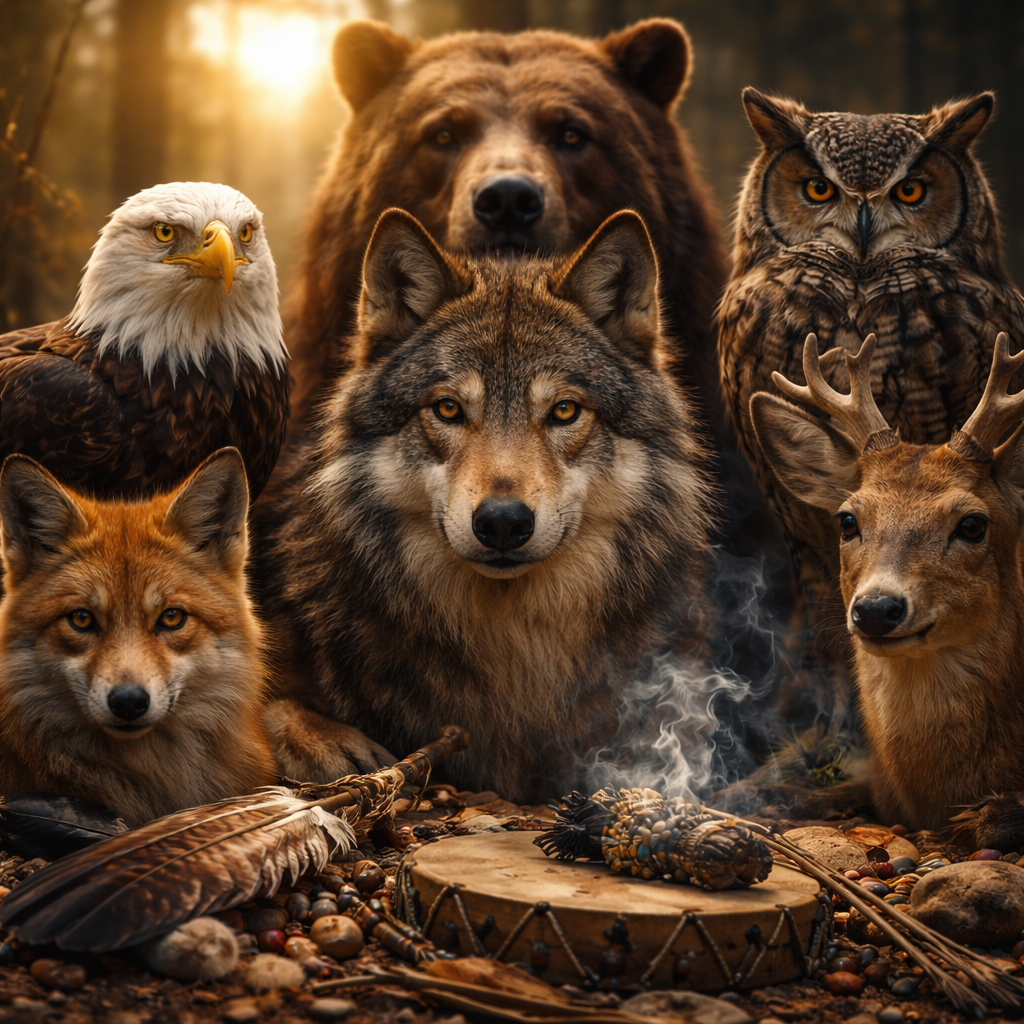
Across Indigenous cultures of North America, Siberia, Africa, and Australia, specific animals have long been recognized as more than just wildlife — they carry symbolic weight, spiritual significance, and personal meaning. The meaning of totem animals goes far beyond superstition or mythology: it reflects a deeply human need to find guidance, identity, and connection through the natural world.
Where the concept actually comes from
The word “totem” originates from the Ojibwe language of the Great Lakes region, derived from the term “ototeman,” which roughly translates to “one who is my kinsman.” Originally, totems referred to clan animals — creatures that entire family groups or tribes identified with as ancestors or spiritual protectors. This was never a decorative idea. It shaped rules about marriage, hunting, and social structure.
Over centuries, the concept spread and evolved. Today it exists in a much broader cultural conversation — one that blends Indigenous traditions, Jungian psychology, modern spirituality, and personal symbolism. That’s worth acknowledging clearly: using totem animals in a contemporary personal context is quite different from practicing an Indigenous tradition, and it’s important to approach the subject with that awareness.
What a totem animal is believed to represent
In traditional frameworks, a totem animal is thought to embody specific qualities, instincts, and energies that a person — or a group — shares or needs to develop. It’s less about what the animal literally does and more about what it symbolizes within a given cultural framework.
| Animal | Commonly associated qualities |
|---|---|
| Wolf | Loyalty, intuition, social bonds, perseverance |
| Eagle | Vision, freedom, spiritual awareness, courage |
| Bear | Strength, healing, introspection, grounding |
| Fox | Adaptability, cleverness, observation, quick thinking |
| Owl | Wisdom, transition, the unseen, inner knowledge |
| Deer | Gentleness, sensitivity, grace, peaceful awareness |
These associations aren’t random — they often come from careful observation of animal behavior over generations. A wolf’s pack loyalty, an eagle’s aerial perspective, a bear’s tendency to withdraw and hibernate: each quality has been translated into human meaning through lived experience with the natural world.
Spirit animals, power animals, and totems — are they the same?
These three terms are frequently used interchangeably, but they carry different nuances depending on the tradition you’re looking at.
- A totem animal is typically tied to a family lineage or community group — it’s collective, not strictly personal.
- A power animal (a concept prominent in shamanic traditions) is called upon for specific purposes, often during ritual or ceremony. It can change depending on what you need.
- A spirit animal in many Native American traditions is earned through vision quests, dreams, or rites of passage — it’s deeply personal and often kept private.
In popular culture, all three tend to blur together under the “spirit animal” label. While that’s understandable, being aware of the distinctions helps you engage with the subject more meaningfully — and more respectfully.
“The animal that appears most in your life — whether in dreams, in nature, or in unexpected places — is often the one worth paying attention to.”
How people discover their totem animal
There’s no universal method, and that’s actually part of the point. In traditional Indigenous practices, the process is guided by elders and embedded in ceremony. Outside of those traditions, people report finding their symbolic animal through a range of experiences.
Some notice a recurring pattern — a certain creature keeps appearing in their life, in books, dreams, conversations, or literally crossing their path. Others feel an unexplained affinity toward a particular animal since childhood. Some use meditation or reflective journaling to explore which animal qualities resonate with who they are or who they want to become.
The psychological angle: why this framework resonates
Carl Jung wrote extensively about animal archetypes as part of the collective unconscious — the idea that certain symbols and figures appear across all human cultures because they represent fundamental psychological patterns. From that lens, a totem animal isn’t supernatural; it’s a way of externalizing inner qualities, instincts, or shadow aspects of the self.
This is partly why the concept continues to attract people who wouldn’t describe themselves as spiritual at all. Identifying with a wolf’s independence or a crow’s perceptiveness can function as a tool for self-reflection — a way of naming qualities that are harder to articulate in purely abstract terms. The animal becomes a shorthand for something real and felt.
Working with your totem animal in a grounded way
If you’re exploring this for personal growth or curiosity rather than within a specific spiritual tradition, here are some grounded approaches that don’t require any particular belief system:
- Learn about the animal’s actual behavior and ecology — real-world knowledge often deepens symbolic understanding.
- Notice when images or encounters with the animal create a strong emotional response, and sit with what that might mean for you personally.
- Use the animal’s qualities as a lens for decision-making: “What would the patience of a heron look like in this situation?”
- Keep the interpretation personal — the same animal can mean different things to different people.
None of this requires appropriating a tradition that isn’t yours. It simply means using a symbol thoughtfully, in a way that serves your own reflection and growth.
When a symbol becomes a compass
What makes the totem animal concept enduring across such different cultures and time periods isn’t magic — it’s utility. Humans have always needed ways to talk about their inner lives, their values, and their place in the larger world. Animals, with their visible behaviors and instincts, offer a vocabulary for that conversation.
Whether you approach totem animals from a cultural, spiritual, or purely psychological angle, the underlying value is the same: they invite you to pay attention — to nature, to recurring patterns, and to the qualities you carry or aspire to. That kind of attention, regardless of framework, tends to be worth something.
