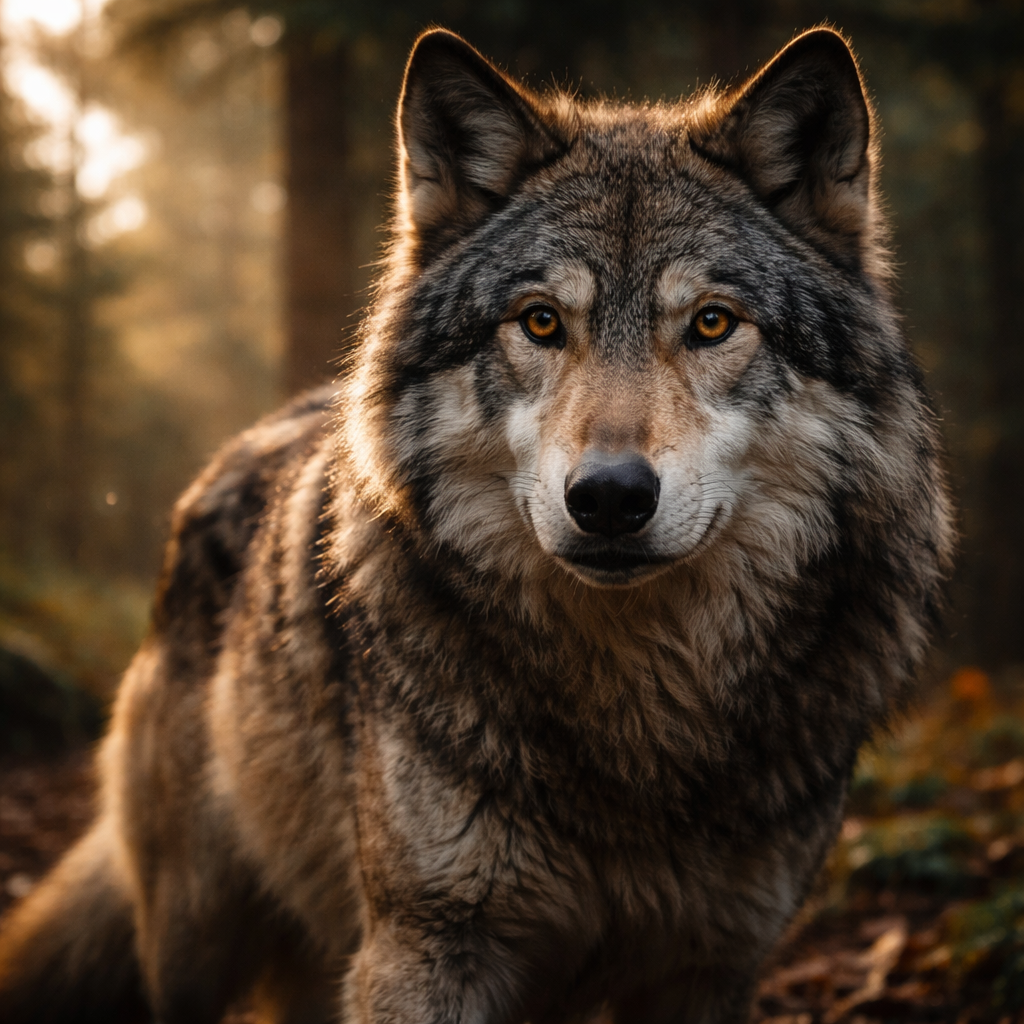
Few animals have traveled as far through human imagination as the wolf — and the meaning of wolf symbolism shifts dramatically depending on where you look and who’s telling the story. Across continents and centuries, this creature has carried the weight of both fear and admiration, often at the same time. What makes wolf symbolism so enduring isn’t just its visual power — it’s how closely the wolf mirrors something we recognize in ourselves.
Why the wolf carries so many meanings at once
Unlike symbols tied to a single trait — say, the dove for peace — the wolf holds contradictions comfortably. It is a pack animal and a lone hunter. A devoted parent and a relentless predator. This duality is exactly what makes the wolf such a rich symbol in mythology, psychology, literature, and modern spiritual practices.
In many Indigenous North American traditions, the wolf is seen as a teacher and pathfinder. Wolves were observed carefully — their hunting strategies, their loyalty to the pack, their communication — and these behaviors were translated into lessons about community, survival, and respect for nature. The wolf wasn’t just a symbol; it was a living model of values.
Wolf symbolism across world cultures
The meaning attached to wolves varies widely across different cultural traditions. Here’s a quick comparison of how different civilizations have interpreted this animal:
| Culture | Wolf Symbolism |
|---|---|
| Ancient Rome | Power, founding mythology (Romulus and Remus were nursed by a she-wolf) |
| Norse mythology | Destruction and chaos (Fenrir), but also cosmic order through opposition |
| Native American tribes | Loyalty, teaching, spiritual guidance, family bonds |
| Mongolian tradition | Ancestral origin, strength, divine connection |
| Medieval Europe | Danger, the devil, wilderness beyond civilization |
| Japanese folklore | Protection of travelers and crops, divine messenger |
What’s striking here is how the same animal can be a protector in one tradition and a destroyer in another. This tells us less about the wolf itself and more about what each society feared or valued at the time these stories were formed.
The lone wolf and the pack: two sides of the same symbol
Modern culture tends to romanticize the lone wolf — the independent thinker, the outsider who forges their own path. This archetype appears constantly in film, literature, and popular psychology. But biologically, wolves are deeply social animals. A lone wolf is usually one that has been separated from its pack, not one that chose solitude by preference.
“The wolf you see alone is not free — it is searching.”
— A common interpretation in wildlife behavioral studies
This gap between the myth and the biology is itself meaningful. The lone wolf symbol speaks to a human desire for self-sufficiency and independence, even as we — like real wolves — tend to thrive in connection with others. Recognizing this tension can actually be a useful lens for self-reflection.
Wolf as a spiritual symbol and totem animal
In spiritual and metaphysical traditions, the wolf totem is often associated with the following qualities:
- Intuition and the ability to read situations quickly
- Deep loyalty to close relationships and chosen family
- Courage to follow your own instincts even under social pressure
- Guardianship — protecting those who cannot protect themselves
- Strong communication, both verbal and nonverbal
- The balance between wildness and structure
People who feel drawn to wolf imagery often describe a sense of resonance with these themes — particularly the tension between belonging to a group and maintaining a strong individual identity. This is one reason wolf symbolism appears so frequently in tattoos, personal emblems, and spiritual practices across different backgrounds.
What does it mean when the wolf appears in dreams?
Dream interpretation is never an exact science, but certain recurring patterns around wolf dreams have been noted by Jungian analysts and dream researchers over decades. The wolf in a dream tends to represent:
- A suppressed instinct or raw emotion seeking expression
- Fear of something powerful that feels out of control
- A protective force, especially if the wolf appears friendly or guides the dreamer
- The shadow self in Jungian terms — the parts of our personality we haven’t fully acknowledged
Context matters enormously. A wolf chasing you and a wolf walking beside you carry very different emotional weight, even if both dreams feature the same animal.
Wolf symbolism in literature and storytelling
From Aesop’s fables to Jack London’s wilderness novels to Angela Carter’s feminist retellings of fairy tales, the wolf has served as a narrative device that authors return to again and again. In children’s stories, the wolf is almost always a villain — cunning, deceptive, dangerous. This reflects the medieval European fear of wolves as threats to livestock and human life.
But more contemporary literature has worked to complicate that picture. Works like Farley Mowat’s “Never Cry Wolf” challenged widespread myths about wolf behavior and sparked broader public interest in wolf conservation. The symbolic wolf and the real wolf began to be examined side by side.
A practical guide: using wolf symbolism intentionally
Whether you’re drawn to this symbolism for personal, creative, or spiritual reasons, here’s how to engage with it thoughtfully rather than superficially:
- Research the cultural origin of the wolf imagery you’re drawn to — meaning varies significantly by tradition
- Ask yourself which aspect of wolf symbolism resonates: loyalty, instinct, independence, or protection?
- Avoid borrowing symbols from cultures you’re not part of without understanding their original context
- Use the symbol as a prompt for self-inquiry rather than a fixed identity label
The wolf still runs
What keeps wolf symbolism alive isn’t nostalgia — it’s relevance. The questions the wolf raises about belonging, instinct, wildness, and loyalty are questions that genuinely matter to people navigating modern life. Whether you encounter the wolf in a museum, a myth, a tattoo parlor, or your own dreams, it tends to ask the same thing: what part of you runs free, and what part of you still needs a pack?
That tension is the heart of it. And it doesn’t have an easy answer — which is probably why we keep coming back to this symbol, century after century, looking for one.
