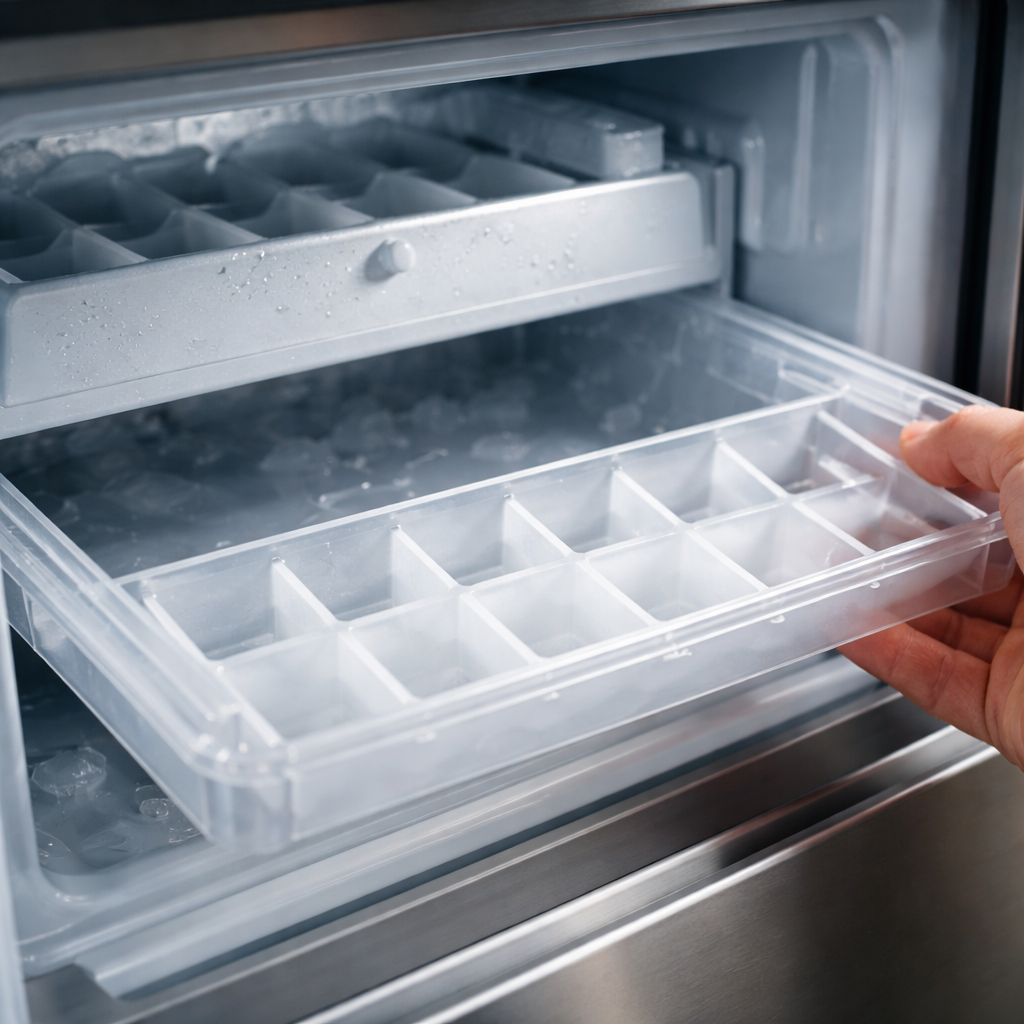
You open the freezer, reach for ice, and find nothing but an empty tray. If your refrigerator ice maker not working is the problem you’re dealing with right now, you’re not alone — this is one of the most common appliance complaints, and in most cases, the fix is simpler than you’d expect.
Start here: rule out the obvious before calling a technician
Before assuming the worst, there are a few quick checks worth doing. Many ice maker issues turn out to be user-side oversights rather than mechanical failures. It sounds almost too simple, but verifying these basics can save you a service call fee.
- Is the ice maker turned on? Some models have a wire arm or a power switch that can accidentally get toggled off.
- Is the water supply line connected and the shutoff valve open?
- Is the freezer temperature set correctly? Ice makers typically need the freezer to be at or below 0°F (-18°C) to function properly.
- Has the ice bin been pushed all the way in? A slightly displaced bin can interrupt the cycle on certain models.
If all of the above check out and there’s still no ice production, it’s time to dig a little deeper.
The most likely culprits behind a frozen silence
Ice maker problems usually come down to one of several repeating causes. Understanding which one applies to your situation helps you avoid guessing and wasting time on the wrong fix.
Clogged or frozen water inlet valve
The water inlet valve controls the flow of water into the ice maker. If it becomes clogged with mineral deposits — especially in areas with hard water — or if water freezes inside the valve due to a temperature drop, the ice maker simply won’t receive any water to work with. This is one of the top causes of low ice production or no ice at all.
Frozen water line
The small plastic tube that delivers water to the ice maker can freeze, particularly if the freezer is running too cold or if there’s been a minor water leak that refroze inside the line. A frozen fill tube is easy to spot — you can often see or feel the blockage near where the line enters the back wall of the freezer.
Faulty ice maker module
The module is essentially the brain of the unit — it controls the timing of the freeze and harvest cycle. When it fails, ice production stops entirely even though everything else may appear to be working fine. Diagnosing this usually requires a multimeter or a replacement test.
Defective water filter
A clogged refrigerator water filter restricts water flow to the point where the ice maker can’t fill its mold properly. Most manufacturers recommend replacing the filter every six months. If yours hasn’t been changed in a long time, this is a logical first repair to try — it’s inexpensive and takes minutes.
A surprising number of ice maker complaints are resolved simply by replacing a long-overdue water filter. It’s the easiest fix to overlook precisely because it’s so mundane.
A quick diagnostic comparison
Here’s a practical breakdown of symptoms and their most likely causes to help you narrow things down faster:
| Symptom | Most Likely Cause | Difficulty to Fix |
|---|---|---|
| No ice at all | Ice maker turned off, frozen water line, failed module | Low to Medium |
| Small or hollow ice cubes | Low water pressure, clogged filter, partial valve blockage | Low |
| Ice maker runs but no water fills | Faulty inlet valve or frozen fill tube | Medium |
| Ice has bad taste or smell | Old water filter, stale water in lines | Low |
| Ice clumps together in bin | Infrequent use, temperature fluctuations | Low |
What you can fix yourself — and what you probably shouldn’t
DIY repairs are absolutely reasonable for a range of ice maker issues. Replacing the water filter, thawing a frozen fill tube with a hair dryer, adjusting the freezer temperature, or resetting the ice maker (many models have a reset button or a test cycle) are all things a careful homeowner can handle without any special training.
However, there are situations where calling a qualified appliance technician makes more sense:
- Replacing the water inlet valve involves working with the electrical and plumbing connections at the back of the refrigerator.
- Diagnosing and replacing the ice maker module requires testing components with a multimeter.
- If the refrigerator’s main control board is involved, that’s firmly in professional territory.
The general rule of thumb: if a repair requires you to disconnect water lines or electrical components inside the appliance, have a professional handle it unless you have hands-on experience with appliance repair.
Resetting the ice maker: a step worth trying
Many modern refrigerators allow you to reset the ice maker directly. The process varies by brand and model, but a common method involves pressing and holding a reset or test button on the ice maker unit itself (usually located on the side or bottom of the module) for three to five seconds until you hear a chime or the unit begins cycling. Consult your refrigerator’s manual for the exact procedure — this single step resolves a surprising number of cases where the ice maker stopped working after a power outage or a long period of non-use.
When ice production slows down rather than stops completely
Sometimes the issue isn’t a complete failure but a noticeable drop in how much ice your refrigerator produces. Reduced ice output is often tied to water pressure — the inlet valve requires a minimum of 20 psi to operate correctly. If your home’s water pressure runs low, the ice maker will produce fewer cubes per cycle or skip cycles altogether.
Another overlooked factor is how often the freezer door is opened. Frequent door openings raise the freezer temperature temporarily, slowing down ice production even when the appliance is otherwise functioning normally. In high-traffic households, this is worth keeping in mind before assuming a mechanical problem.
Getting your ice maker back in shape for the long run
Once your ice maker is running again, a bit of regular attention keeps it that way. Replace the water filter on schedule, keep the freezer temperature steady between 0°F and 5°F (-18°C to -15°C), and periodically clear out the ice bin to prevent clumping. If you’re going to be away from home for more than a week, consider turning the ice maker off to avoid a melted and refrozen mass waiting for you when you get back.
Ice makers are reliable when they’re given basic care. Most of the problems that send people searching for help online are preventable — and where they’re not, they’re fixable without a large repair bill. Knowing the difference between a quick reset and a component replacement is what makes the whole process a lot less stressful.
