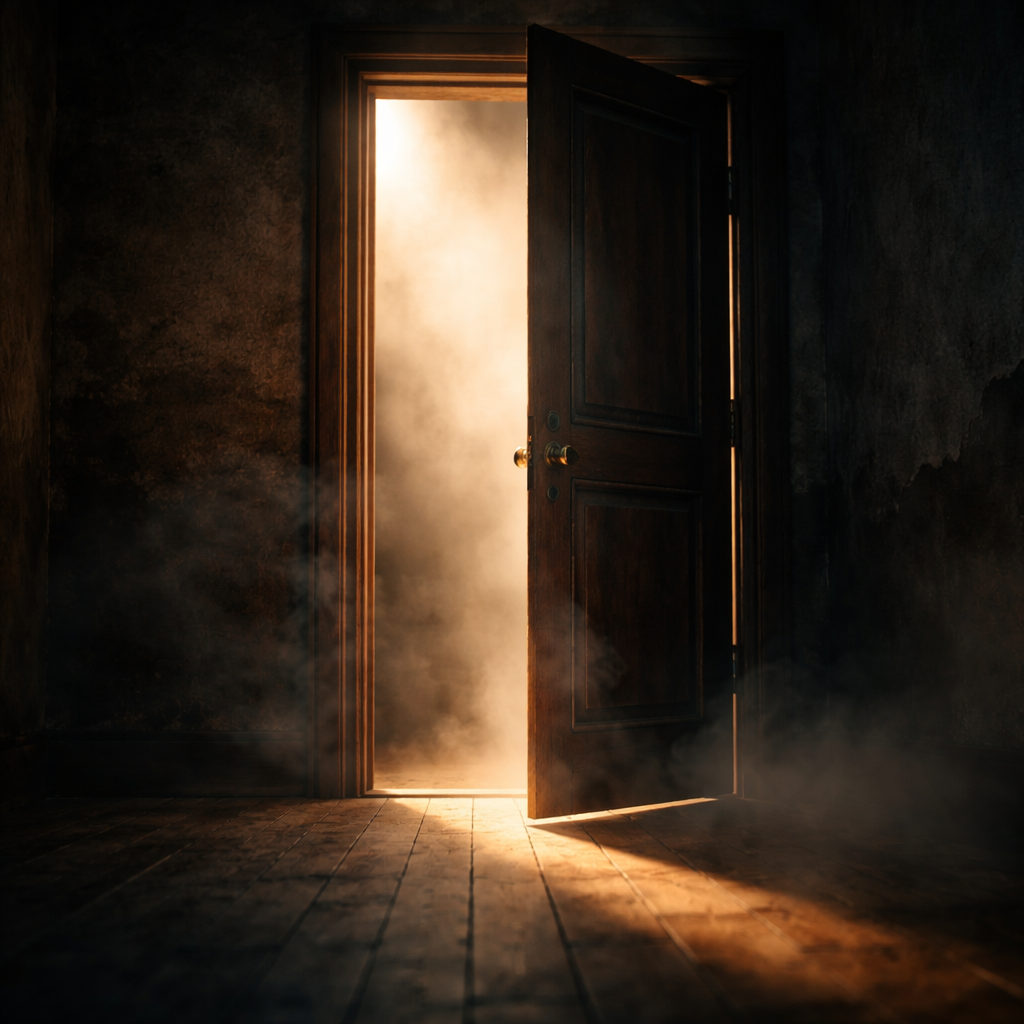
Most people wake up from a dream about a door and immediately wonder — was that random, or did it actually mean something? Psychologists and dream researchers have spent decades studying what does dreaming about a door mean, and the short answer is: quite a lot, depending on what was happening in the dream and how you felt during it.
Why doors appear in dreams more often than you might expect
Doors are one of the most universally recognized symbols in human psychology. They mark the boundary between one space and another — between the known and the unknown, safety and risk, the past and what comes next. Because we interact with doors dozens of times a day without thinking, the brain stores them as a powerful shorthand for transitions and choices. When something major is shifting in your waking life, the subconscious mind often reaches for exactly this kind of symbol to process it.
Dream analysts working within the tradition of Carl Jung pointed out that architectural elements in dreams frequently represent the self or the psyche. A house is the whole person; a door is the point of decision — the moment where something can be entered, exited, opened, or closed off entirely.
What different door scenarios tend to signal
The meaning shifts significantly depending on the specific details of the dream. A locked door carries a very different emotional weight than one swinging open by itself. Here is a breakdown of the most commonly reported door dreams and what recurring patterns researchers and therapists have associated with them:
| Dream scenario | Common psychological association |
|---|---|
| An open door you walk through freely | Readiness for change, openness to new experiences or opportunities |
| A locked or stuck door | Feeling blocked, frustrated, or lacking access to something important |
| A door that won’t close | Difficulty setting boundaries, inability to leave something behind |
| An unfamiliar door you’re afraid to open | Anxiety about the unknown, fear of commitment or a new phase |
| Many doors in a corridor | Feeling overwhelmed by choices, uncertainty about direction in life |
| A broken or damaged door | Vulnerability, loss of privacy, or a weakened sense of security |
These associations are not rigid rules — they are patterns observed across many people over time. Your personal context always plays the biggest role in interpretation.
The emotional tone matters more than the visual detail
One of the most consistent findings in dream psychology is that how you felt during the dream is more diagnostic than what you saw. Two people can dream of a locked door and walk away with completely opposite experiences — one feeling relieved, the other terrified. That emotional data is the most direct signal your subconscious is sending.
Dreams do not come to tell us what we already know. They surface the things we have not yet been willing to look at directly.
If the dream left you anxious or stuck, it might be worth reflecting on where in your waking life you feel similarly restricted. If it felt exciting — even if the door led somewhere dark or unfamiliar — that excitement is worth paying attention to as well.
Recurring door dreams and what they might be pointing to
When the same dream keeps coming back, it usually means the underlying issue has not been resolved. Recurring dreams about doors — especially ones where you cannot open them, cannot find the right one, or keep returning to the same hallway — often appear during periods of prolonged indecision, unresolved grief, or a major life transition that has stalled.
Therapists who work with recurring dreams suggest keeping a short dream journal — not to over-analyze every detail, but to notice patterns across time. What kind of door keeps appearing? Are you always alone? Is there urgency or calm? These patterns over weeks or months tell a much richer story than any single dream in isolation.
Cultural and symbolic layers behind the door image
Across many cultural traditions, doors carry spiritual and symbolic weight far beyond their practical function. In folklore and mythological storytelling, doors and thresholds appear as liminal spaces — places between worlds, between states of being, between one chapter of life and the next. This symbolism is so deep-rooted that it likely contributes to why the image surfaces so readily in dreams.
In many spiritual traditions, dreaming of a door is interpreted as a message about readiness — whether or not you are prepared to step into something new. In analytical psychology, specifically in Jungian thought, a door behind which something unknown waits is often read as an encounter with the shadow self — the parts of your personality or experience you have not yet fully acknowledged.
Specific details that shift the interpretation
Beyond the basic open-or-closed dynamic, smaller details in the dream can refine the meaning considerably. Consider the following:
- The color of the door — dark colors often relate to the unknown or unconscious; bright colors may suggest energy, invitation, or hope.
- Who else is present — dreaming of someone standing in a doorway between you often points to that relationship and unresolved communication.
- Whether you knocked or walked in without hesitation — reflecting your real-life tendency toward caution versus impulsiveness.
- What was behind the door — light, darkness, water, a familiar room, or something threatening all carry distinct associations.
- Whether you were on the inside or outside — being locked out differs meaningfully from choosing not to open from within.
None of these elements should be read in isolation. A dark door you walk through calmly is a very different experience from a bright door that fills you with dread. The combination of image and emotion is where interpretation becomes genuinely useful.
When your dreams are trying to tell you something worth hearing
Dreams about doors tend to cluster around moments of real-life change — job shifts, relationship transitions, health challenges, creative blocks, or major decisions that have been avoided too long. If these dreams are showing up regularly and carrying emotional intensity, that is usually a signal worth taking seriously — not as prophecy, but as honest self-reflection in a language your waking mind rarely uses.
You do not need to decode every image with perfect precision. The more useful question is simpler: where in your life right now does something feel locked, unopened, or uncertain? The dream is almost certainly drawing from exactly that place. Sitting with that question honestly — even uncomfortably — tends to be far more productive than any single symbolic interpretation could be.
