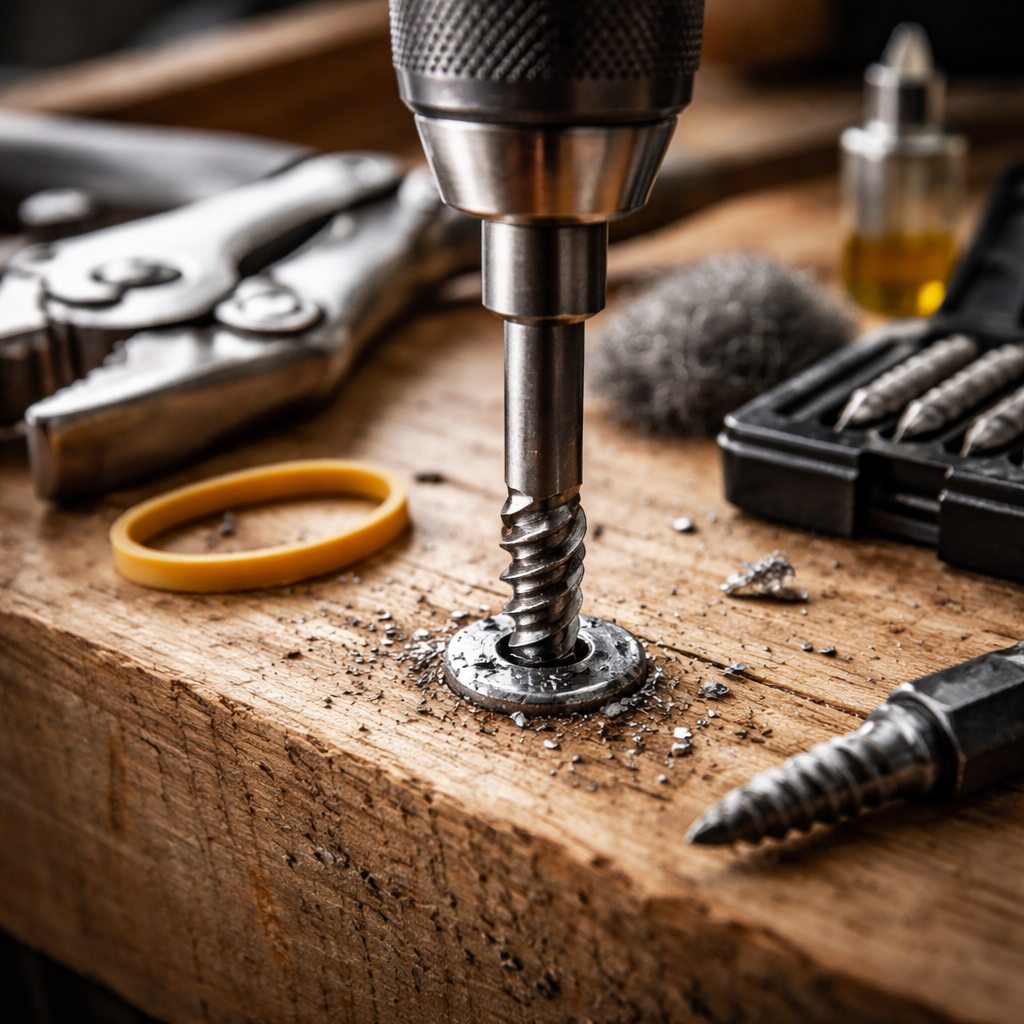
Most people assume how to fix a stripped screw is some kind of trade secret known only to seasoned contractors — but the truth is, there are several reliable methods anyone can use at home with tools they likely already own. A stripped screw is frustrating, but it is almost never a dead end.
Why screws strip in the first place
Before reaching for a solution, it helps to understand what actually happens when a screw strips. The head of the screw — whether Phillips, flathead, or Torx — has recesses designed to grip a driver tip. When too much torque is applied, when the driver slips repeatedly, or when the wrong bit size is used, those recesses wear down and lose their shape. The driver then spins freely with nothing to grab onto.
Common causes include using a worn-out screwdriver bit, applying downward pressure at the wrong angle, or simply using the incorrect bit type for the screw. Power drills set to high torque are also a frequent culprit, especially with softer metals or smaller screws.
The rubber band trick — simple and surprisingly effective
One of the most widely recommended approaches requires nothing more than a wide rubber band. Place the rubber band flat over the stripped screw head, then press your screwdriver firmly into it and attempt to turn the screw. The rubber fills in the damaged grooves and provides just enough friction to get the screw moving.
This method works best when the screw is only partially stripped. If the head is severely damaged, you will need to move on to more aggressive techniques.
Steel wool placed over the head works on the same principle and is a good alternative when a rubber band is not available. The key in both cases is maintaining firm, consistent downward pressure while turning slowly.
Tools and methods ranked by damage level
Not every stripped screw situation is the same. A screw that has just begun to slip calls for a different approach than one that has been completely rounded out. Here is a practical breakdown to help you choose the right method:
| Damage Level | Recommended Method | Tools Needed |
|---|---|---|
| Light stripping | Rubber band or steel wool | Screwdriver, rubber band |
| Moderate damage | Screw extractor bit | Drill, extractor set |
| Head partially sheared | Locking pliers (Vise-Grips) | Pliers |
| Deeply embedded screw | Dremel slot cutting | Rotary tool, flathead driver |
| Completely destroyed head | Left-handed drill bit | Drill, reverse bits |
Using a screw extractor — the go-to tool for stubborn cases
Screw extractor kits are inexpensive and available at any hardware store. They consist of specially hardened bits with reverse-cut spirals. The process involves two steps: first, you drill a small pilot hole into the center of the stripped screw using a regular bit; then you insert the extractor bit, set your drill to reverse, and apply steady pressure. As the extractor bites into the screw, the reverse rotation pulls it out.
It is essential to drill the pilot hole straight and centered. If you angle the drill even slightly, the extractor will not engage properly and you risk making the situation worse. Take your time with this step — it is the foundation of the whole process.
When the screw head is accessible but rounded — locking pliers to the rescue
If the screw is not fully recessed into the material and some of the head is still visible above the surface, locking pliers give you a mechanical advantage no screwdriver can match. Clamp the pliers tightly onto the sides of the screw head and rotate counterclockwise. The grip strength is usually more than enough to back the screw out completely.
This approach does leave marks on the screw head and sometimes on surrounding material, so it is best used when the surface finish is not a concern or when the screw will be discarded afterward. For visible woodworking or cabinetry, consider protecting the surrounding surface with painter’s tape before clamping.
Cutting a new slot with a rotary tool
When the original recess is completely destroyed but the screw head is still intact, a rotary tool with a cutting disc can cut a fresh, straight slot across the head. This converts the screw into a flathead, allowing a standard flathead screwdriver to engage with it.
- Mark the center of the screw head with a marker before cutting to keep the slot centered.
- Cut slowly and with light pressure — you need a groove, not a deep cut that weakens the head.
- Make sure the slot depth matches a flathead bit you have on hand.
- Wear eye protection — metal shavings from rotary cutting are sharp and unpredictable.
Preventing stripped screws from happening again
Once you have successfully removed the problem screw, a few simple habits will keep you from repeating the experience. Always match your bit size precisely to the screw head — a bit that is even slightly too small will cam out under pressure. When using a power drill, set the clutch to a lower torque setting and let it disengage before the screw seats fully, finishing the last turn by hand.
For screws going into hardwood, pre-drilling a pilot hole reduces resistance and dramatically lowers the chance of stripping. Replace worn screwdriver bits regularly — a tip that shows rounding or shining at the edges has lost its grip and will damage screw heads even under normal use.
The right fix depends on what you have in front of you
There is no single best method for every situation. A barely stripped screw in softwood responds beautifully to the rubber band trick in under a minute. A corroded screw buried in hardwood after years of exposure might need penetrating oil, a pilot hole, and a quality extractor bit working together. Reading the situation correctly is half the work.
The good news is that with the methods above, almost no stripped screw is truly unremovable. Even in worst-case scenarios — where the head breaks off entirely — a left-handed drill bit spinning in reverse will often catch the remaining shank and back it out. Keep a basic extractor set in your toolkit and the next stripped screw will feel like a minor inconvenience rather than a project-stopping disaster.
