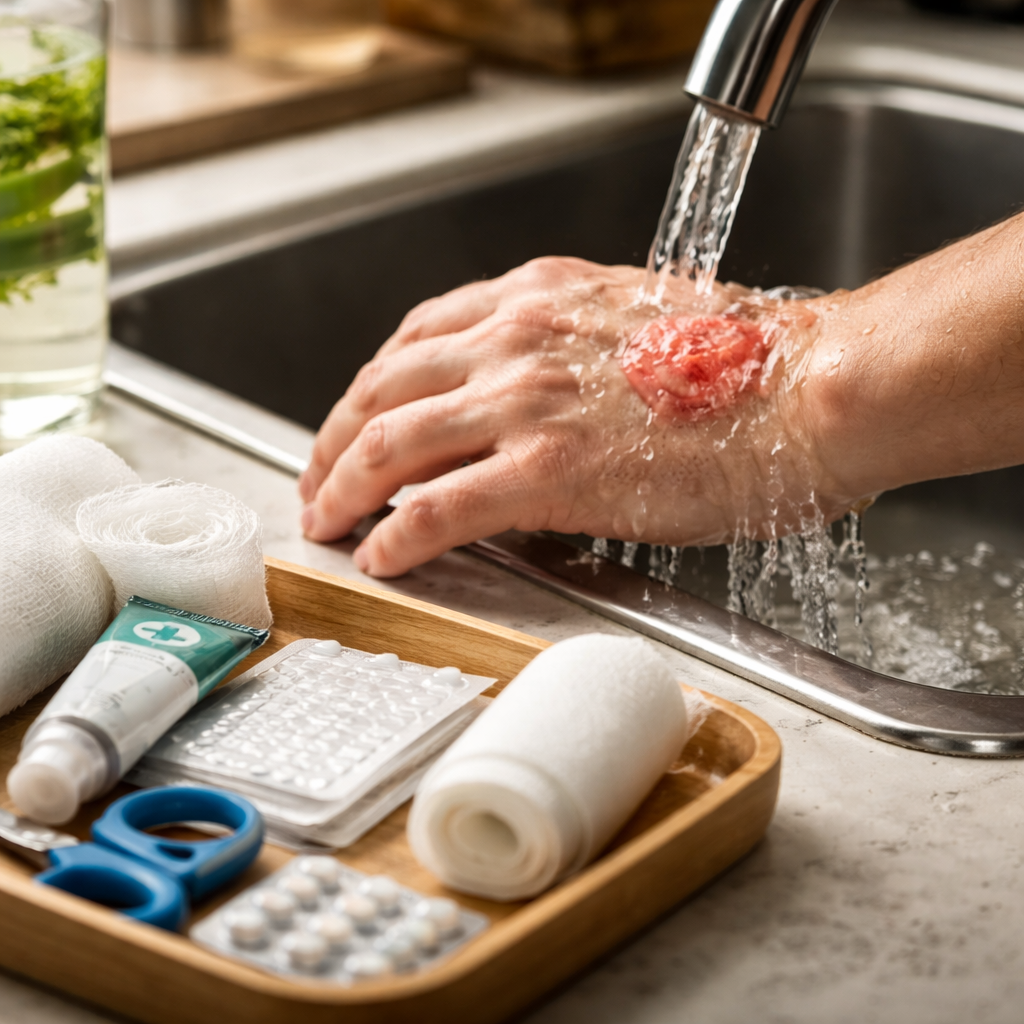
Most minor burns happen in the most ordinary moments — a splash of hot oil, a careless touch of a heated pan, or too much time in the sun. Knowing how to treat a burn at home correctly can make a real difference: it reduces pain faster, lowers the risk of infection, and helps skin recover without unnecessary complications.
Not all burns are the same — and that changes everything
Before reaching for any remedy, it helps to understand what you’re actually dealing with. Burns are classified by depth, and the right response depends entirely on which type you have.
| Burn degree | What it looks like | Can you treat it at home? |
|---|---|---|
| First degree | Red skin, mild swelling, no blisters | Yes, in most cases |
| Second degree (superficial) | Blisters, intense redness, wet appearance | Only small areas — less than 3 inches |
| Second degree (deep) / Third degree | White or charred skin, little to no pain due to nerve damage | No — requires emergency care immediately |
If the burn is on the face, hands, feet, genitals, or over a major joint — or if the affected person is a young child or elderly — medical attention is always the safer choice, regardless of how the burn looks.
The first ten minutes matter the most
The single most effective first aid step for a thermal burn is also the simplest: cool running water. Not ice, not butter, not toothpaste — just cool tap water for 10 to 20 minutes. This step actively reduces tissue damage by drawing heat away from the deeper skin layers.
According to burn care guidelines, cooling should begin within 3 hours of injury to be effective — but the sooner, the better. Water temperature should be cool, not cold: between 15–25°C (59–77°F).
A common mistake is reaching for ice or ice-cold water. This can cause vasoconstriction and actually worsen tissue damage rather than help. The same applies to home remedies like egg whites, oil, or aloe vera gel applied immediately — the priority in the first moments is always cooling, nothing else.
Step-by-step: caring for a minor burn after cooling
Once the burn has been cooled and the skin temperature has normalized, you can begin more focused care. Here’s a practical sequence that aligns with standard first aid recommendations:
- Gently pat the area dry with a clean cloth — avoid rubbing.
- Cover the burn loosely with a sterile non-stick bandage or clean cling film. Do not wrap tightly.
- If blisters form, leave them intact. Popping blisters opens a direct path for bacteria and significantly increases infection risk.
- Use an over-the-counter burn gel or cream containing ingredients like lidocaine for pain relief or silver sulfadiazine if available and appropriate.
- Take a mild pain reliever such as ibuprofen or acetaminophen if needed for discomfort.
- Change the dressing daily, or whenever it becomes wet or dirty.
It’s worth noting that aloe vera — the pure gel form, not scented lotion — does have evidence behind it as a soothing agent for first-degree and minor second-degree burns. It helps with moisture retention and has mild anti-inflammatory properties. However, it works best as a supportive measure, not a substitute for proper wound dressing.
What to watch for in the days that follow
A healing burn shouldn’t get worse over time — it should gradually improve. If you notice any of the following signs, the wound may be infected or not healing as expected:
- Increasing redness or warmth spreading around the burn area
- Swelling that worsens after the first day
- Yellow or greenish discharge from the wound
- An unpleasant or unusual odor
- Fever or chills
- Pain that intensifies rather than decreasing
Any of these symptoms are a signal to stop home treatment and consult a doctor. Burn infections can progress quickly, especially in people with diabetes, weakened immune systems, or poor circulation.
Burn healing and skin recovery: supporting the process
Once the initial wound closes, the skin continues repairing itself beneath the surface. This phase can take anywhere from a week to several weeks depending on burn depth. Keeping the area moisturized with a fragrance-free lotion helps prevent excessive dryness and cracking, which can slow healing and cause discomfort.
Sun exposure on a healing burn can lead to permanent hyperpigmentation. Protect the area with clothing or a broad-spectrum SPF 30+ sunscreen for at least 12 months after the injury.
Itching is a normal and common part of the healing process — it often means the skin is regenerating. Resist scratching, as it can damage fragile new tissue and increase the chance of scarring. Applying a cool, damp cloth to the area provides temporary relief without causing harm.
Things that seem helpful but aren’t
There’s a long list of folk remedies that have been passed down through generations but are not supported — and in some cases are actively discouraged — by medical professionals. A quick reference:
| Remedy | Why to avoid it |
|---|---|
| Butter or oil | Traps heat in the skin and increases infection risk |
| Toothpaste | Contains chemicals that can irritate damaged skin |
| Ice or ice water | Can cause frostbite and worsen tissue damage |
| Raw egg white | Risk of Salmonella contamination on open skin |
| Vinegar or lemon juice | Acidic — can cause additional chemical irritation |
It’s understandable why these remedies persist — they’re immediate, available, and passed along with good intentions. But the skin barrier after a burn is compromised, making it far more vulnerable to anything applied to it.
When to skip home care entirely and call for help
Home treatment is entirely appropriate for small, minor burns — but it has clear limits. Seek emergency medical care without hesitation if:
- The burn is larger than 3 inches (about 7.5 cm) in diameter
- The burn is deep, with white, brown, or black discoloration
- There is no pain in the burned area (a possible sign of nerve damage)
- The burn was caused by chemicals or electricity
- The person inhaled smoke or has burns around the mouth, nose, or throat
- The injured person is a child under 5 or an adult over 60
Electrical burns especially are deceptive — the surface wound can look small while the internal damage runs much deeper. These always require professional evaluation.
Taking care of yourself doesn’t mean going it alone
Handling a minor burn calmly and correctly at home is absolutely within reach for most people — and it genuinely works when done right. Cool water, clean dressing, gentle care, and paying attention to how the wound progresses over days are the pillars of effective first aid burn treatment. But there’s no shame in picking up the phone or heading to a clinic when something doesn’t look right. Knowing when to act and when to ask for help is, in the end, the most useful skill of all.
